A soap label can look technical even when the formula is fairly straightforward. Learning a few ingredient roles makes the list easier to read and helps you compare products based on what matters to your own routine.
What makes a bar soap a soap
Traditional bar soap begins with oils or fats and an alkali. During saponification, they react to form soap and glycerin. On an ingredient list, finished soap may appear as names such as sodium olivate or sodium cocoate, indicating soap derived from olive or coconut oil.
The final character depends on the full recipe, proportions, cure, and added ingredients. Seeing one familiar oil does not tell the whole story. Product descriptions should explain the lather, rinse, scent, and intended use rather than relying on a single hero ingredient.
Glycerin and the feel of lather
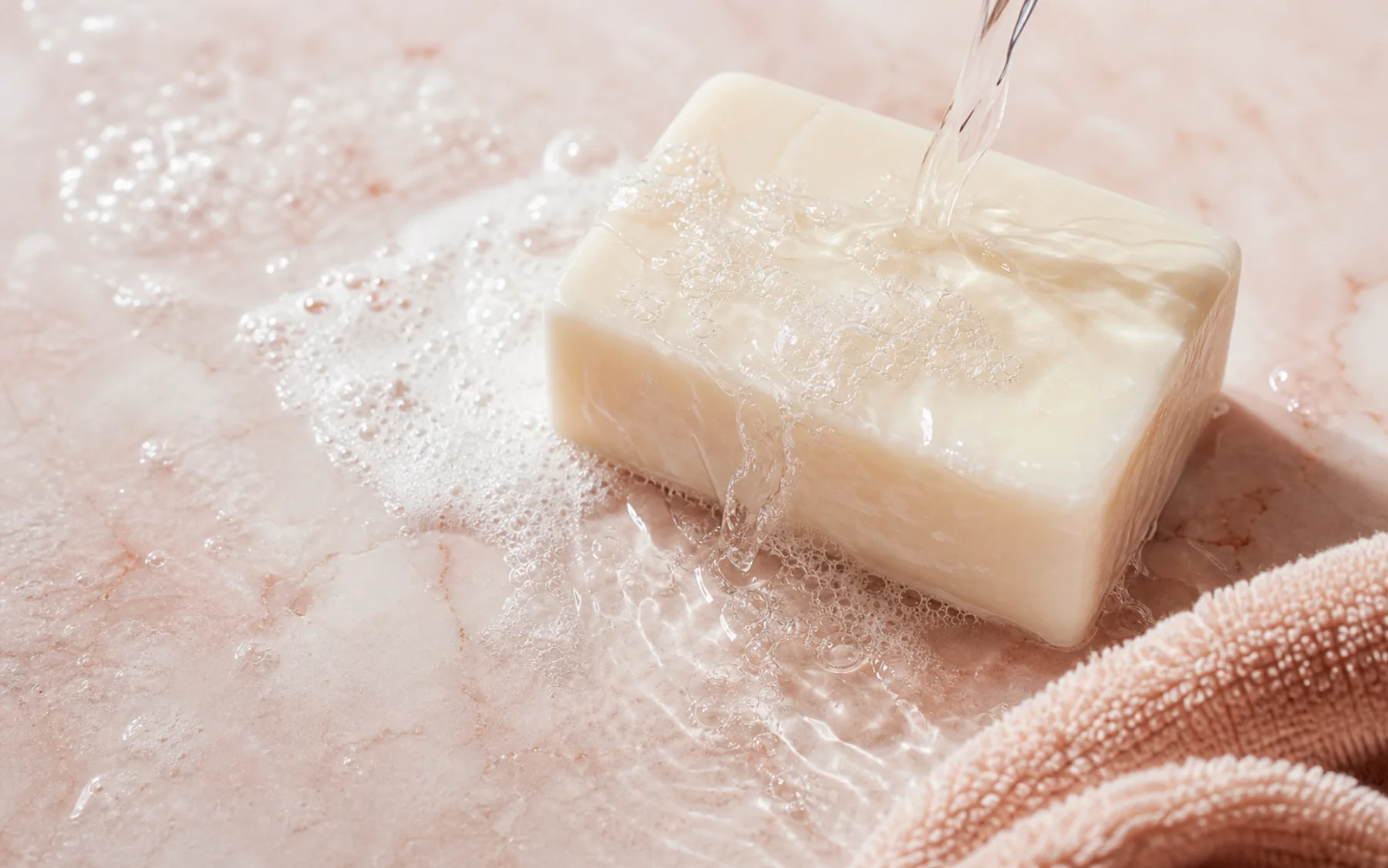
Glycerin is a humectant, meaning it attracts water. It is naturally created during traditional soapmaking and may also be added to cleansing formulas. In use, it can contribute to a smooth, comfortable feel.
A liquid cleanser often combines several mild surfactants—the ingredients that help water lift and carry away oils. Names such as decyl glucoside or cocamidopropyl betaine are common. The finished formula matters more than judging one name in isolation.
Oat, clay, aloe, and rice
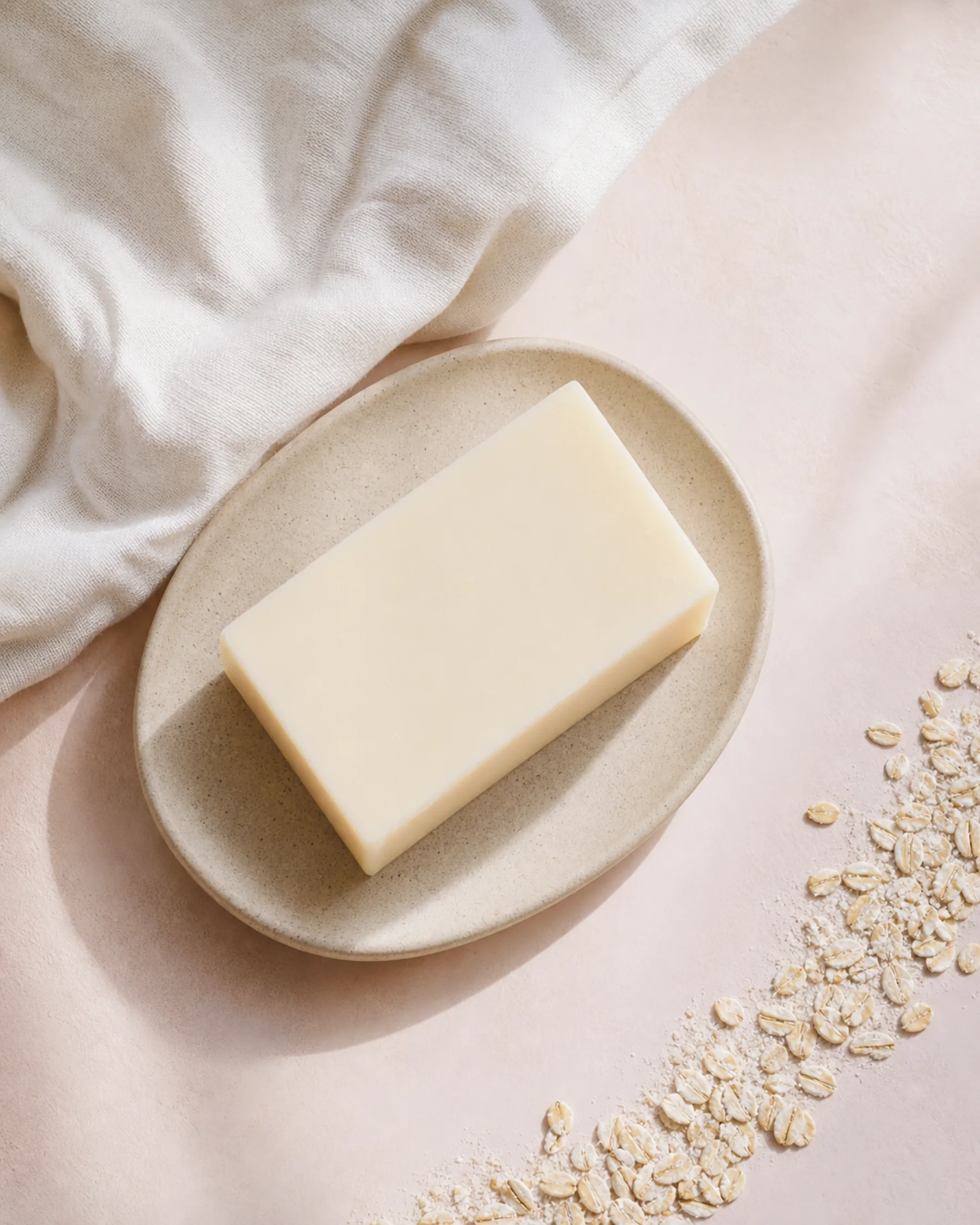
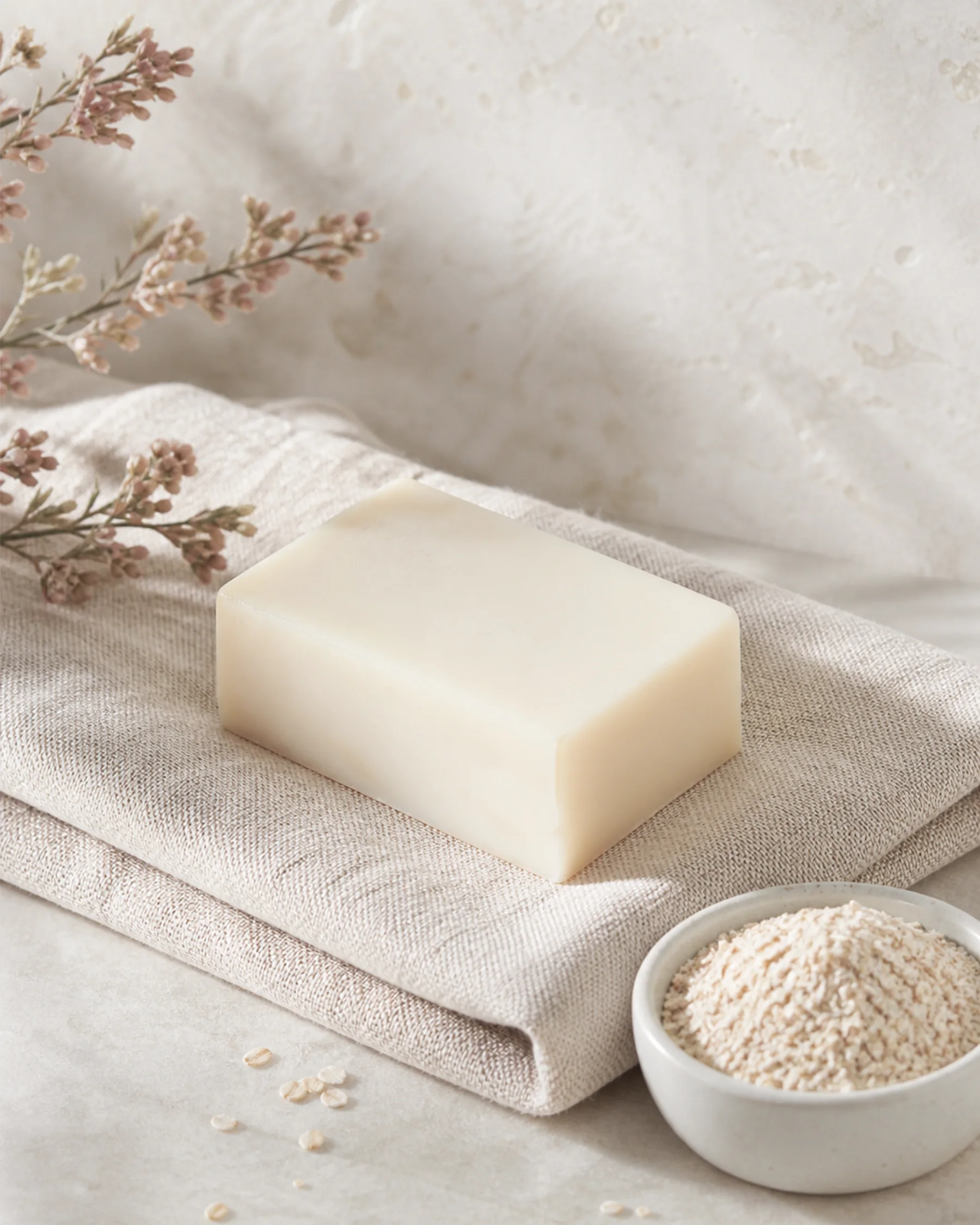
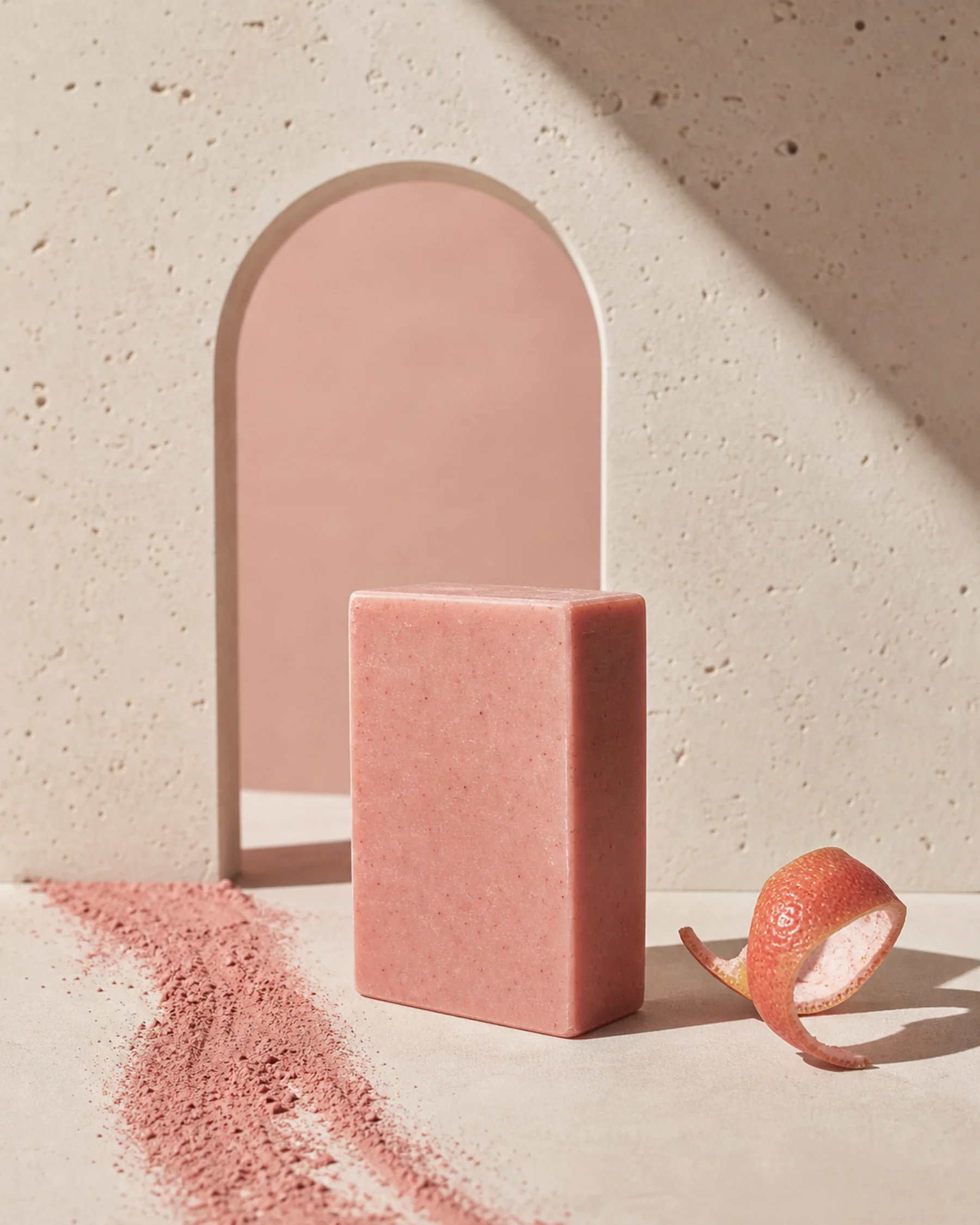
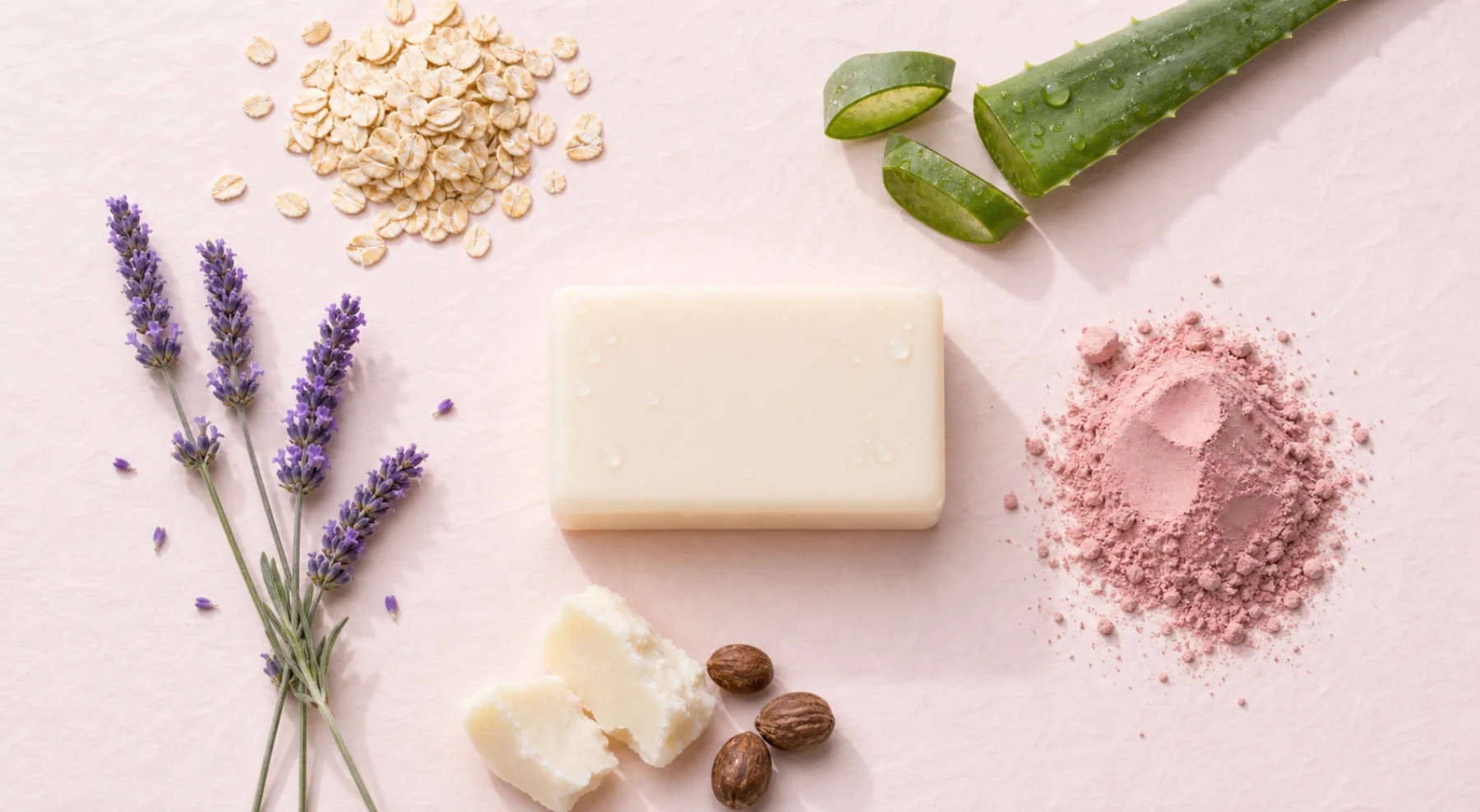
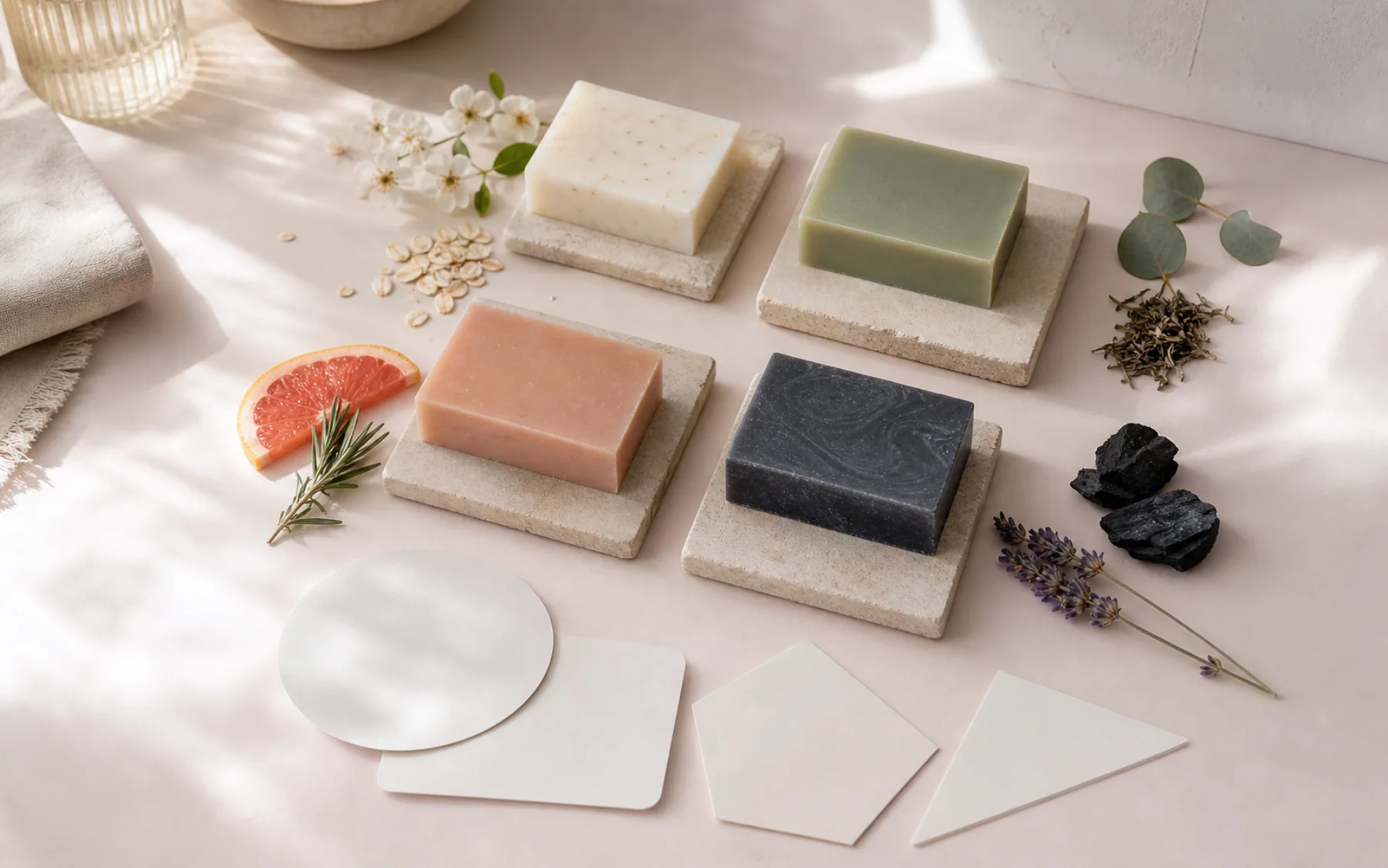
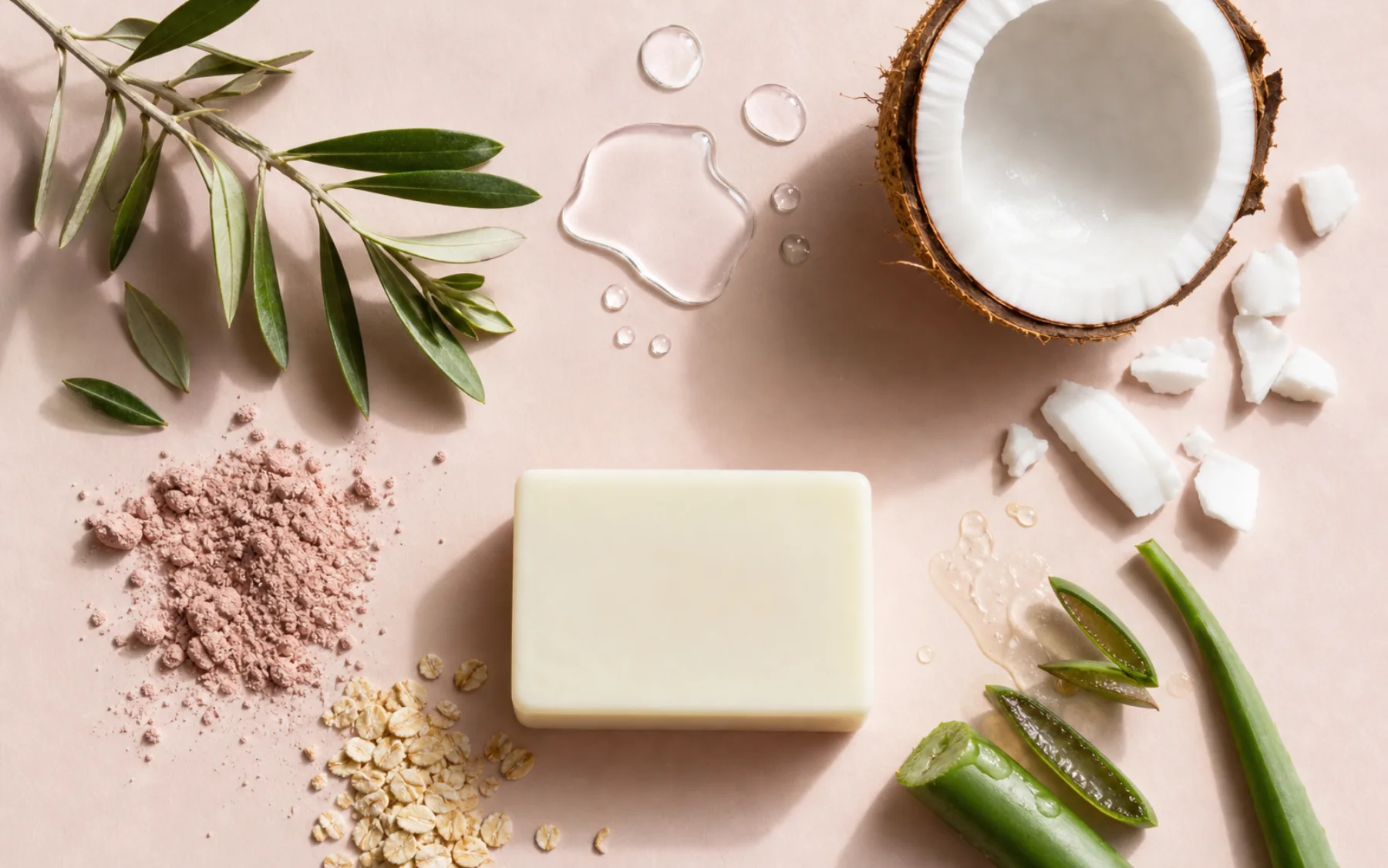
Finely milled oat can add a soft, cushiony quality. Clay contributes color and slip, and different clays range from pale white to blush pink. Aloe juice is often included in gentle-positioned formulas, while rice powder can create a softly polished texture.
Particle size matters. A well-made oat or clay bar can feel completely smooth. If you prefer no exfoliating texture, look for wording such as finely milled and check whether the product is described as a scrub.
Try this
- Read the complete list when avoiding an ingredient.
- Look for the product’s intended area of use.
- Treat natural and synthetic as descriptions, not automatic quality scores.
- Patch-test when you know your skin is selective.
Fragrance, essential oils, and fragrance-free
Fragrance may be built from aroma materials, essential oils, or a combination. Essential oils are fragrant ingredients too; natural origin does not make them unscented. A fragrance-free formula avoids added ingredients whose purpose is scent, though raw materials can still have an aroma.
Choose based on preference and past experience. If you enjoy fragrance, look for a clear profile and a stated intensity. If you avoid it, verify the complete ingredient list instead of relying only on a product name.
Preservatives in water-based products
Liquid washes contain significant water and need an appropriate preservation system. Preservatives help keep the formula safe and stable during its intended life. Bar soaps contain less available water and have different formulation needs.
Packaging matters as well. A pump helps reduce repeated contact with the product inside. Keep caps and pumps clean, avoid adding water to the bottle, and follow any period-after-opening guidance on the package.
How we write about ingredients
MX Soap uses ingredient lists alongside plain-language role and sensory information. The MX Merchant Soap collection highlights thoughtfully selected ingredients without turning them into medical promises. The MX Merchant lens asks what an ingredient contributes to texture, aroma, stability, or everyday use.
Across this mx soap journal, the mx merchant soap edit favors clarity over ingredient fear. The mx merchant approach is an editorial framework within MX Soap, not a separate business or certification. Complete lists remain the best reference when you need to avoid a specific ingredient.
The short version
- Finished formulas matter more than one hero ingredient.
- Glycerin contributes to a smooth feel.
- Finely milled oat and clay need not be scrubby.
- Essential oils are fragrant ingredients.
- Water-based washes require preservation.